
Medicare Open Enrollment for 2027

The Annual Medicare Open Enrollment Period (OEP) runs from October 15 through December 7.   

Any changes you make to your Medicare coverage during this time will become effective January 1, 2027.

  • Your Medicare card
  • All current insurance cards (including prescription drug and supplemental coverage)
  • A current printed list of your medications
  • A current list of your physicians and specialists
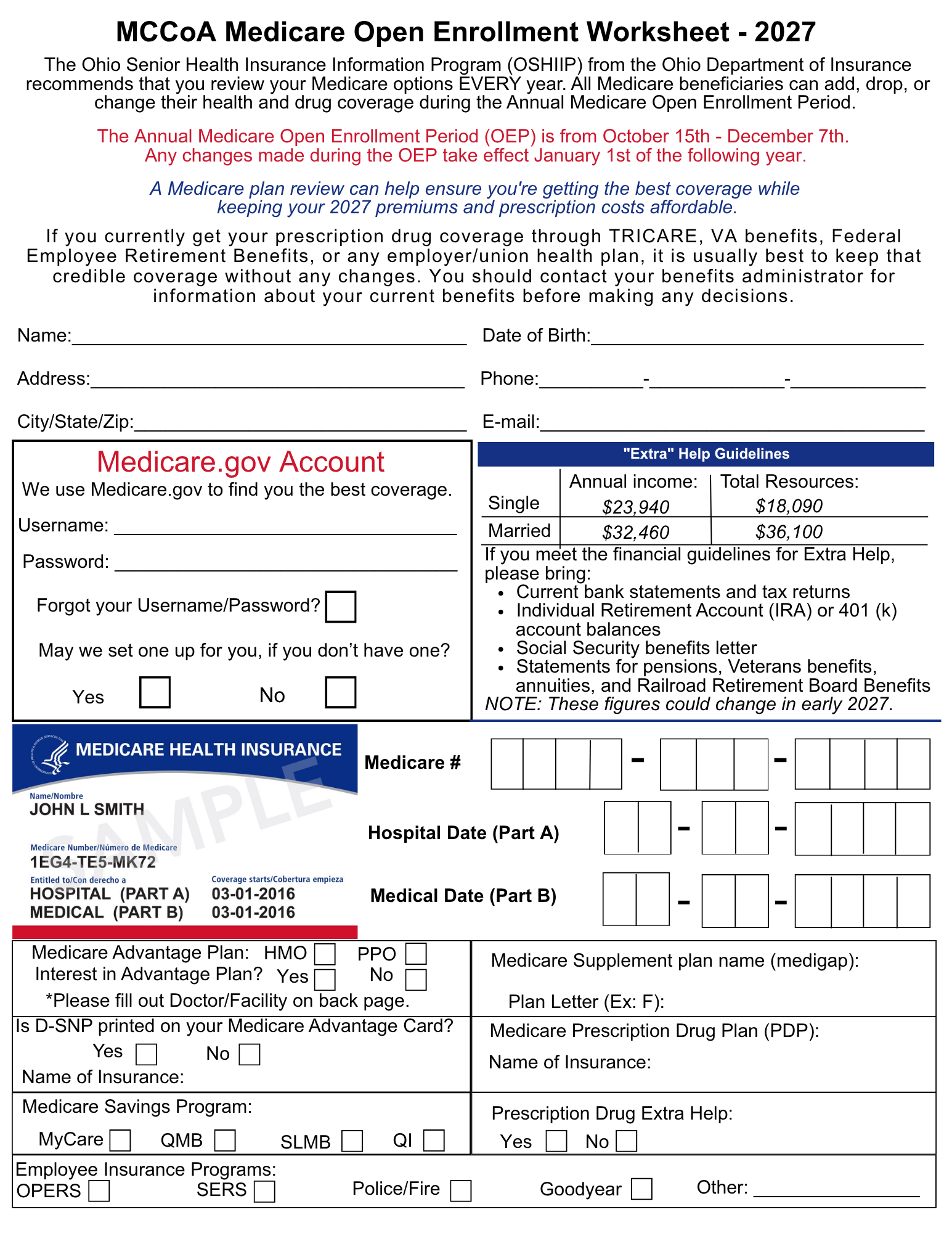
Once we receive your completed worksheet and all required documents, our office staff will schedule an appointment for you with an Outreach Specialist during the Open Enrollment period.


We encourage all Medicare beneficiaries to review their coverage each year, Medicare plans, premiums, deductibles, copayments, formularies, and provider networks can change annually.  Reviewing your options helps ensure you have the coverage that best meets your healthcare needs and budget for the coming year.

Your Personal Guide to Medicare Plan Review

To schedule your Medicare plan review, please complete the Mercer County Council on Aging (MCCoA) 2027 Medicare Open Enrollment Worksheet and return it to our office along with the following items:

Outreach Service Medicare Open Enrollment FAQs

Answers for seniors, caregivers, and concerned neighbors

  • What exactly do Outreach workers do?

    Outreach workers act as guides and advocates for seniors and caregivers who need help understanding available services and benefits. They explain programs like Medicare, Medicaid, prescription coverage, and local support options in plain language. They also help complete applications, make referrals to other agencies, and coordinate with MCCoA programs such as equipment loans or transportation. In many cases, they become a go-to resource families can return to whenever new questions arise.

  • Who can use Outreach Services, and is there a cost?

    Outreach support is available to older adults in Mercer County, this includes seniors living in Celina, Coldwater, St. Henry, Rockford, Fort Recovery, and surrounding rural communities, as well as family members and caregivers who are helping a senior navigate care decisions. There is no fee for this service; it is supported through community funding and the county levy. Whether your income is limited or comfortable, you can receive the same compassionate guidance. Our goal is to ensure no senior or family misses out on help simply because they don’t know where to look.

  • What types of issues can Outreach help with?

    Outreach workers can help with a wide range of concerns, including understanding Medicare options, exploring long-term care programs, and navigating home care or support services. They can connect you to resources such as home repair programs, meal services, emergency response systems, or veterans’ benefits when applicable. They also coordinate with partners such as the Alzheimer’s Association to provide caregiver support, dementia-related resources, and care consultations. If something falls outside MCCoA’s direct services, they work to find the right external resource.

  • Do I have to come into the office, or can someone meet me at home?

    Outreach staff can meet with you at the MCCoA center, speak by phone, or arrange a home visit for seniors who are homebound or have difficulty traveling. Home visits allow them to better understand the senior’s living situation and needs in a comfortable setting. This flexibility helps ensure that mobility issues, lack of transportation, or health concerns do not prevent anyone from receiving help. Together, you can decide the meeting option that feels easiest and most comfortable.

  • How do I schedule an Outreach appointment, and what should I bring?

    To schedule a visit, you can contact MCCoA and ask to speak with an Outreach worker or request an appointment time. It’s helpful to bring any insurance cards, benefit letters, or important paperwork you have, but don’t worry if you’re unsure what’s needed—your outreach worker will walk you through it. During the meeting, you’ll have time to explain your situation, ask questions, and review next steps. By the end, you’ll leave with a clearer picture of your options and a partner you can reach out to again as needs change.